Home / Blog / Health and care / Skin types: why some people tan whilst others burn
Skin types: why some people tan whilst others burn

Published: 8/14/2026
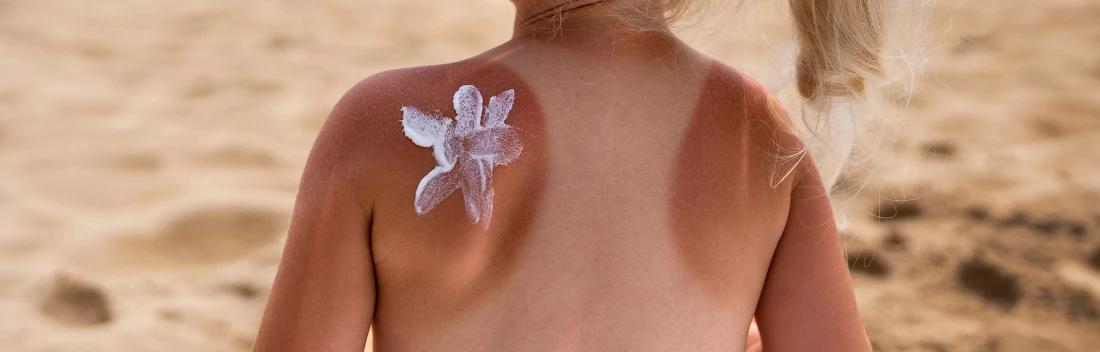
Some people spend an afternoon on the beach and come back with a lovely tan. Others, however, find that just a few minutes in the sun is enough for their skin to burn. What causes this difference? Is it a matter of luck, genetics or having ‘sensitive skin’? The answer lies in your skin type.
In this blog post, Farmaciasdirect explains what skin phototype is and how it ‘determines’ how your skin reacts to the sun. With this knowledge, we’ll help you choose the right sun protection and prevent sunburn, dark spots, premature ageing and other skin conditions.
What is a skin phototype?
A skin phototype is a classification of skin (Fitzpatrick Scale) based on how your skin reacts to the sun – in other words, its ability to tan or burn.
This behaviour is determined by the amount and type of melanin in our skin. Remember that melanin is the pigment responsible for skin colour (as well as hair and eye colour).
The 6 skin phototypes, one by one
According to the Fitzpatrick Scale, there are six distinct skin phototypes, differing in colour and behaviour. Thus, the more melanin our skin contains, the greater its ability to defend against solar radiation and the lower the risk of developing skin cancer:
Skin type 1
People with very fair skin, red or blonde hair and light-coloured eyes. This skin type is more sensitive to the sun; it almost always burns and does not tan.
Skin type 2
People with fair skin and blonde or light brown hair. They tend to burn easily but can achieve a slight tan after several exposures.
Skin type 3
People with medium-toned skin (beige or slightly golden), light brown eyes and light or medium brown hair. They tend to burn at the start of exposure, but can develop a gradual, even tan if exposure is appropriate.
Skin type 4
Dark or slightly dark skin, dark brown eyes and dark brown or black hair. These people rarely burn and tan quickly and deeply.
Skin type 5
Dark skin, very dark brown eyes and black hair. They do not usually burn, although they remain vulnerable to damage from solar radiation.
Skin type 6
Very dark or black skin, very dark eyes and black hair. This is the skin type that offers the greatest protection against sunburn, but it can still burn with unprotected exposure. It can also suffer from photoageing, hyperpigmentation, etc.
How can you tell what skin type you have?
To identify your skin phototype, you should look at the following aspects:
- Skin colour or tone
- How often your skin burns or tans
- Eye colour
- Hair colour
If you usually burn before you tan, you probably have skin type I or II. If you tan gradually with few sunburns, you’re most likely skin type III or IV. People with naturally dark skin usually have skin types V and VI.
Why some people tan and others burn
If you’re wondering why you don’t tan, or why some people’s skin tans whilst others get burnt, you should know that it all comes down to melanin.
Melanin is a powerful defence mechanism for our skin against solar radiation. So, when our skin is exposed to the sun, cells called melanocytes produce melanin to try to protect our cells’ DNA. This response results in a tan.
The greater your ability to produce melanin, the stronger the defensive response and the deeper the tan. This is why fairer skin tends to burn.
Although a tan is associated with ‘protected skin’, it is actually a biological response to sun damage. Therefore , regardless of your skin type, it is essential to protect your skin from the sun with the right sunscreen and to limit exposure during the middle of the day.
Sun protection according to your skin type
Understanding your skin is the first step towards protecting it properly. However, although melanin offers protection against the sun, it does not provide complete protection, meaning that no skin type is entirely immune to sun damage; therefore, people with all skin types should use sun cream every day.
For sun protection to be effective, you should bear in mind:
- Apply the right amount of product.
- Reapply the right amount of product every 2 hours, after heavy sweating or after swimming.
- Opt for sunscreens with a high sun protection factor and filters that protect against different types of radiation.
- Choose the right sun cream for your skin type, its condition and your needs.
Among the most recommended options for daily use are:
Heliocare 360 Water Gel
Heliocare Water Gel offers a sun protection factor (SPF) of over 50, protects against different types of radiation and, thanks to its patented antioxidant formula, helps repair the skin from sun damage from within.
With its ultra-light, fast-absorbing texture and high moisturising capacity, it is the perfect ally for skin in need of hydration.
Eucerin Sun Face Hydro Protect Fluid SPF 50
Eucerin Sun Face Hydro Protect Fluid is an ideal choice for those seeking high protection with a light, moisturising finish. Its formula protects against UVA and UVB rays whilst providing hydration without leaving a greasy feeling, making it suitable even for sensitive skin.
Knowing your skin type is the first step towards looking after your skin properly, but it is no substitute for a good sun protection routine.