Home / Blog / Veterinary Pharmacy / Omega-3 for dogs and cats: benefits for the skin and coat
Omega-3 for dogs and cats: benefits for the skin and coat

Published: 10/22/2026
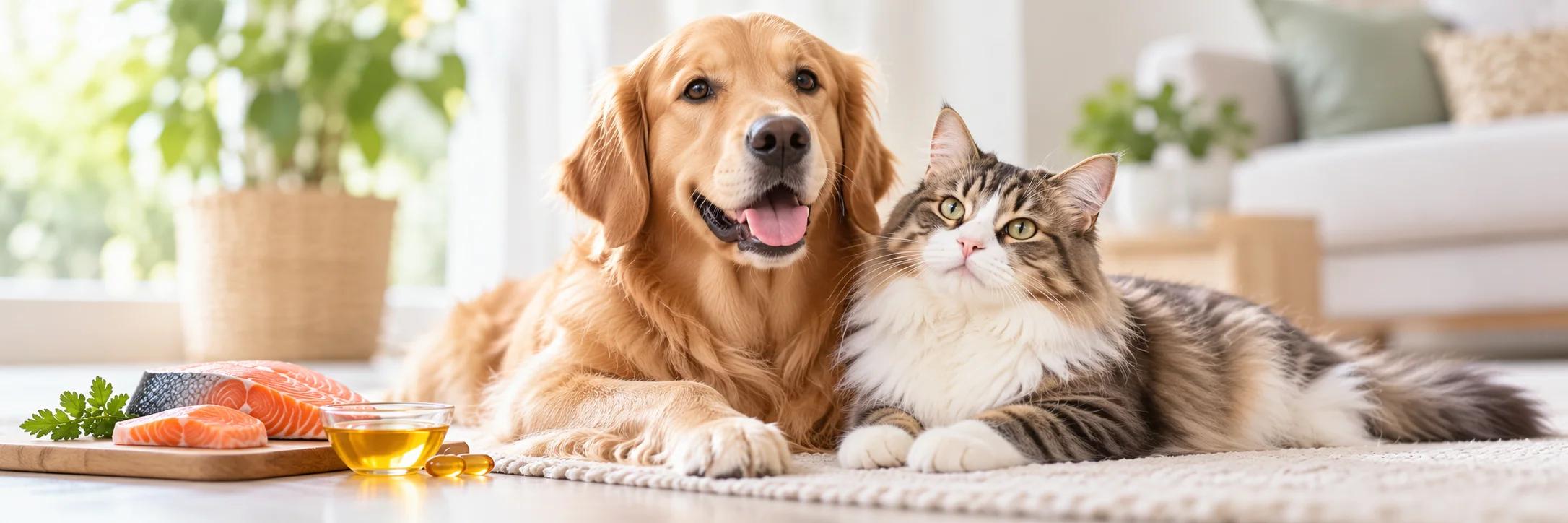
Healthy skin and a strong, shiny coat do not depend solely on external care. Diet also plays a vital role in the health of our pets’ skin and coats, and nutrients such as omega-3 fatty acids can be great allies.
Omega-3 for dogs and cats is one of those essential nutrients that the body needs to obtain through diet. Among its best-known sources are certain fish and fish oils, such as salmon oil.
But what benefits can it offer? Can it help if you notice your pet has dry skin, is scratching more than usual or is losing fur? We’ll tell you everything you need to know.
What are omega-3s and why are they important for dogs and cats?
Omega-3s are essential polyunsaturated fatty acids that play a role in various bodily functions. Within this group, EPA (eicosapentaenoic acid) and DHA (docosahexaenoic acid) are particularly important; they are found mainly in fish and oils of marine origin.
Incorporating sources of omega-3 for dogs and omega-3 for cats into a balanced diet can help maintain healthy skin and coat, as well as supporting other bodily functions.
For this reason, they can be found both as part of complete foods and in specific products, such as fish oil for dogs and cats.
Benefits of omega-3 for the skin and coat of dogs and cats
The skin is our pets’ first line of defence against the outside world. When this barrier is compromised, we may start to notice dryness, flaking, a duller coat or even increased scratching.
A suitable diet that provides essential fatty acids can help to support this barrier from within.
Helps keep the skin hydrated
Fatty acids play a part in maintaining the skin barrier and can help keep the skin in good condition.
This is particularly beneficial for animals prone to dryness or whose coat has lost its softness and shine.
Promotes a strong, shiny coat
The appearance of the coat can tell us a lot about our pet’s general health.
A balanced diet rich in essential nutrients helps maintain a strong, soft and shiny coat. That’s why foods and supplements containing omega-3 for dogs can be a useful addition to your pet’s regular skin and coat care routine.
It can be a helpful aid during shedding seasons
Hair loss in dogs is not always a cause for concern. There are times of the year, particularly during seasonal changes, when dogs may shed more hair as part of the natural moulting process.
During these periods, it is particularly important to ensure a complete and balanced diet, frequent brushing and good skin care habits.
Essential fatty acids such as omega-3 can form part of this nutritional routine aimed at keeping the coat in optimal condition.
My dog scratches a lot: can omega-3 help?
“My dog scratches a lot” is one of the most common queries we receive when we start to notice changes in their skin.
Occasional scratching is completely normal, but when it becomes frequent or intense, it’s worth paying attention. Itching can have numerous causes: dry skin, parasites, environmental or food allergies, irritations, skin infections or certain illnesses.
Omega-3 can help maintain healthy skin as part of a balanced diet, but it is no substitute for a veterinary diagnosis or treatment when there is a skin problem.
If, in addition to scratching, you notice redness, sores, localised hair loss, severe flaking, a foul odour or a significant change in your pet’s behaviour, it is advisable to consult a vet.
Omega-3 for dogs: how to incorporate it into their diet?
Featured products


There are various ways to provide omega-3 to dogs. One of the most common is through food containing fish or marine-sourced oils.
TOGO salmon oil is a simple option for supplementing your dog’s usual diet and providing fish-derived fatty acids.
The oil can be added to their daily food, always following the quantities recommended by the manufacturer and taking into account the weight, age, usual diet and specific needs of each dog.
It is important to remember that adding a supplement does not mean that ‘more is better’. If your dog already eats a complete diet rich in omega-3 or has any medical conditions, consult your vet before introducing any additional supplements.
Omega-3 for cats: looking after their skin starts in the food bowl too
Cats also need a complete diet that provides essential fats to keep their skin and coat in good condition.
In cats, a dull coat, increased flaking or changes in grooming behaviour may indicate that something is wrong, so it is always important to look out for other possible symptoms.
A simple way to incorporate fish into their diet is to choose complete foods specifically formulated for cats. For example, Edgard & Cooper Pacific salmon chunks allow you to introduce salmon into their regular diet in a way that is tailored to their nutritional needs.
When it comes to omega-3 for cats, it is particularly important to always use products suitable for them and to stick to the recommended amounts.
Fish oil for dogs and cats: what should we bear in mind?
When looking for an additional source of omega-3, fish oils are one of the most common options.
Before adding fish oil for dogs or cats to their diet, there are several points to bear in mind:
- Choose products specifically formulated or labelled for pets.
- Follow the recommended dosage based on the product and the animal’s weight.
- Store the oil correctly to prevent it from going off.
- Incorporate it into a balanced diet; do not use it as a substitute for one.
- Consult your vet if your pet is undergoing any treatment, has a medical condition or requires a specific diet.
When should we be concerned about hair loss in dogs?
Hair loss in dogs is part of their natural cycle, particularly during moulting seasons. However, not all hair loss is the same.
It is advisable to consult your vet if hair loss is very severe, if bald patches appear, if there is constant itching, if you notice wounds or skin lesions, or if you detect sudden changes in the condition of the coat.
In these cases, simply increasing your dog’s intake of omega-3 should not be the only course of action. First, you need to identify the cause of the problem.
Omega-3, diet and care: the combination for healthy skin and coat
The condition of a dog’s or cat’s skin and coat depends on many factors: genetics, diet, age, environment, hygiene, potential illnesses and daily care.
Providing essential fatty acids through a balanced diet can help maintain healthy skin and coat. Fish, foods containing fish as an ingredient, and products such as salmon oil are some of the options we can incorporate into our pets’ diets.
And remember: if you notice that your dog is scratching excessively, losing more hair than usual or has skin lesions, consult a vet to identify the cause and find the most appropriate treatment.