
What happens to hormones during the menopause?

Last updated: 7/14/2025
/ Published: 7/14/2025
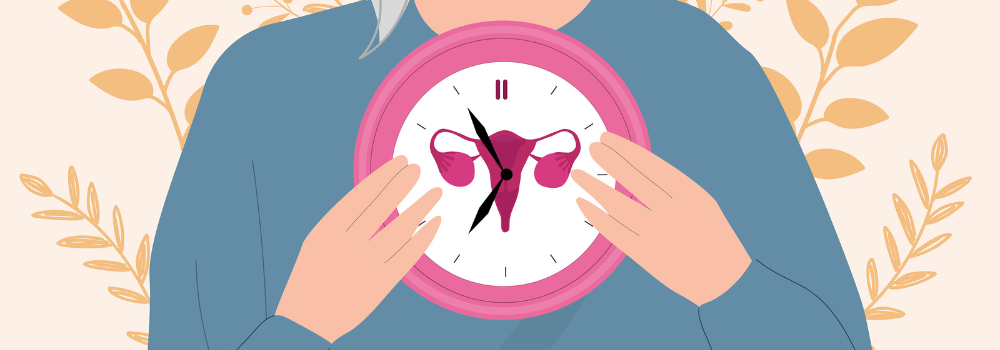
Menopause is a natural stage that all women will go through at some point in their lives. It is a transition marked by the permanent end of menstruation, signalling the end of the fertile stage. This is where hormones during the menopause play a very important role. Would you like to know what it is?
Menopause: what now?
Menopause is a stage women go through once they reach a certain point in life. It is defined by the end of periods or menstruation, which generally happens between the ages of 45 and 55, although this can vary from one woman to another.
However, this stage is not only accompanied by the end of menstruation, but also by a series of other symptoms which, in many cases, can affect our health or physical, emotional or sexual wellbeing.
It is true that this is a natural stage in a woman’s life cycle, but that does not mean it cannot become a difficult period in some cases, affecting many women’s quality of life. And do you know which hormones change during the menopause? It is this hormonal change that mainly affects oestrogen and progesterone levels.
Hormones during the menopause: why do they change and how can you balance them?
Hormones mark the stages a woman goes through, for example, pre-puberty, fertile years and menopause.
During the reproductive stage, the ovaries produce oestrogen and progesterone. These are the hormones responsible for regulating the menstrual cycle, fertility, bone health, skin and mood, among many other functions.
As we get closer to menopause, known as perimenopause, these hormone levels begin to be produced much more irregularly. Then, once menopause arrives, their production decreases significantly until it stops altogether.
And it is this drop in hormones during the menopause that causes certain very characteristic symptoms, which may affect a woman’s quality of life:
- Vaginal dryness.
- Hot flushes and sweating, especially at night.
- Mood changes and irritability.
Featured products


- Loss or reduced libido.
- Changes to the sleep cycle, sometimes leading to insomnia.
- And loss of bone density.
These are the most common symptoms, and many of them can be improved or their intensity eased to enhance the quality of life of women going through this stage.
What can you take to regulate hormones during the menopause?
If you want to know how to balance hormones during the menopause, here are the most suitable products both for regulating hormones and for improving symptoms associated with menopause.
Mucus Cumlaude
Mucus cumlaude is a lubricant that helps improve vaginal dryness, one of the main symptoms of menopause. Its use helps improve vaginal hydration, lubrication and mucosal elasticity to prevent irritation or pain during sexual intercourse and to provide daily comfort thanks to active ingredients in its formula, such as hyaluronic acid.
Menoprime de Solgar
These are tablets for menopause hormones whose formula combines active ingredients such as red clover and sage to gently balance the hormonal system. Menoprime de Solgar helps improve hot flushes, insomnia and irritability. It is not the same as hormone replacement therapy, but it can help deliver similar benefits.
Menovamp de Aboca
Its formula stands out for active ingredients such as black cohosh, which has been shown to have beneficial effects on mood disorders. It also contains passionflower, another natural active ingredient with benefits for sleep and night-time rest. For this reason, Menovamp de Aboca helps provide hormonal and physical balance to support wellbeing during the menopause.
You now know that hormonal imbalance during the menopause is a completely natural process that we can manage using different pharmacy supplements. Understanding these changes can help us understand what is happening in our body and know what to provide in each situation to improve our quality of life.


