
Warts: types and treatments

Last updated: 12/20/2024
/ Published: 5/17/2021
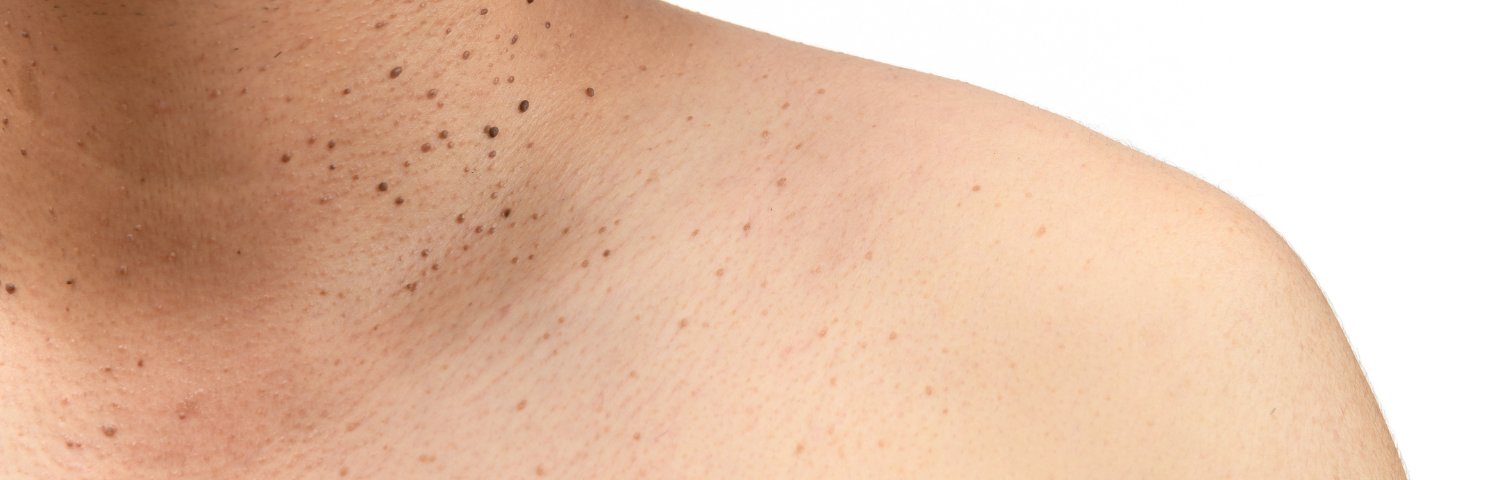
Warts appear on the skin of many people as a result of a dermatological disease. There are several types of warts and, although most fall off on their own, we will explain different treatments that can help speed up their disappearance. Keep reading!
Warts are small lumps on the skin caused by an infectious dermatological disease, the human papillomavirus(HPV). Although they are usually associated with an unsightly appearance, most warts are painless on their own, although discomfort may increase if they are knocked or rubbed.
The appearance of warts is very common during childhood. However, they can appear at any stage of life. They can be passed on through direct contact with another infected person or with an object that has rubbed against a wart. Another possible route of transmission is sexual intercourse.
After infection, they may take up to half a year to show visible symptoms.
Types of warts
There are several categories of warts, which are divided as follows:
- Common or vulgar warts. These are the most common type of wart. They have a rounded, rough shape. These warts may appear either in groups or individually.
- Mosaic warts. These are very small warts that appear in large numbers. These lumps are generally painful.
- Filiform warts. They usually appear on the neck and eyelids. They often catch on necklaces, combs or nails. These warts are elongated in shape and quite soft, so they generally end up falling off on their own.
- Genital warts or condylomas. These warts have a cauliflower-like shape, when there are many of them, and they are softer. They are highly contagious and are transmitted during sexual intercourse. They usually appear in the genital area, the groin and surrounding areas.
- Flat warts. These warts are common in children and teenagers. They are small, do not usually protrude far from the skin and have a whitish colour that blends in with the skin. In addition, these lumps appear in groups or clusters.
- Plantar warts or papillomas. These lumps appear on the soles of the feet. This location means that discomfort increases due to body weight and the type of footwear used.
- Subungual and periungual warts. These are the warts that appear under the nail and around it, respectively.
However, these types of warts are general categories, as there are more than 100 subtypes of warts.
How can warts be prevented?
To reduce the risk of infection and the spread of warts:
- Avoid direct contact with warts, including your own, and with objects that touch these lumps.
- Avoid walking barefoot in certain areas where there is a greater risk of infection, such as showers, swimming pools or saunas. Therefore, wear flip-flops or sandals to prevent infection on your feet.
- Do not pull warts off.
- Do not bite your nails.
- Use a disposable nail file, when you have subungual or periungual warts.
Featured products


- Maintain proper washing and hygiene. You should also avoid sharing personal hygiene products.
- Do not smoke. Smokers are more likely to become infected than non-smokers.
- In cases of genital warts, you should use condoms for any sexual activity and avoid intercourse if visible warts are present. However, a doctor may recommend vaccinating the patient against HPV.
Even so, there are several treatments that can be used to fight warts, as we will see below.
Treatments for warts
Most warts do not need treatment in order to disappear, as one third of them disappear within six months of appearing. Likewise, if they do not cause pain or discomfort, they do not necessarily need to be removed.
However, common and plantar warts do have several treatment options, as they are usually the most bothersome.
Scholl Stop Verrugas
An anti-wart skin treatment that tackles the appearance of warts on the palm of the hand or the sole of the foot, using cryotherapy.
For more information about this product, you can click this link.
Scholl Lápiz Tratamiento Verrugas
A pen with anti-wart action that removes warts on the palm of the hand or the sole of the foot, through a freezing treatment.
You can find out more about this product by accessing this link.
Farmalastic Durezas y Verruga Plantar Protector
Farmalastic Durezas y Verruga Plantar Anti-presión is a protector designed by podiatrists. It is specifically designed to reduce friction on the epidermis, helping to relieve hard skin and warts.
To find out more about this product, you can click this link.
Isdin Anti Verrugas Solución Tópica 20 Ml
Antiverrugas Isdin is a medicine indicated to soften warts on the skin and make them easier to remove. The action of this medicine is due to two active ingredients, salicylic acid and lactic acid.
These are two compounds with notable anti-wart properties whose action is scientifically recognised.
Treatments for warts vary depending on the type. However, these treatments should be carried out under the medical supervision of a dermatologist to ensure a correct diagnosis.
Do you have warts and are unsure how to treat them? At Farmaciasdirect we have a pharmaceutical team who can advise you on the different treatments available to fight them. Do not hesitate to contact us. We will be delighted to help you.


