Home / Blog / Health and care / How to use retinol: a beginner’s guide
How to use retinol: a beginner’s guide

Last updated: 2/15/2024
· Published: 10/12/2023
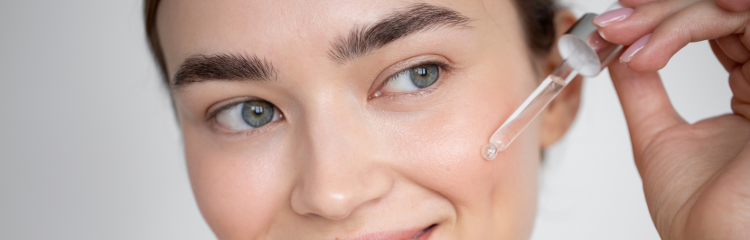
Retinol is a popular skincare ingredient used to treat a variety of concerns, such as ageing, acne and hyperpigmentation.
If you are a beginner in the use of retinol, it is important to use it properly to obtain the best results and avoid irritation.
In this post we leave you a beginner’s guide on how to use retinol. But before we start:
What is retinol?
It is the active form of vitamin A that we can find in many skincare products. It has become a very popular active ingredient because it helps activate cell renewal, reducing wrinkles and improving skin texture and acne.
But why is it so important to know how to use retinol? The reason is that it can cause skin irritation, especially on skin that has never used it before.
To help with this, we have prepared a short beginner’s guide to using this active ingredient.
Beginner’s guide to using retinol
Consult a skincare expert
Before starting to use retinol, it is advisable to speak to a skincare expert to determine whether it is suitable for your situation and your specific needs.
Start with a low concentration
If you are new to retinol, choose a product with a low concentration (around 0.25% or 0.5%) to minimise the risk of irritation. One we recommend starting with is Endocare Renewal 0.2%.
Retinol in the morning or at night?
Because it can make the skin more sensitive to the sun, it is recommended to use it preferably at night and not to start during the summer months.
Apply good sun protection during the day to protect the skin from dark spots. It is also worth remembering that we should cleanse and dry the skin before applying the product.
Use a small amount
Start with a small amount of retinol, approximately the size of a pea, and apply it all over the face.
In addition, we recommend starting to use it every two or three nights so your skin gradually gets used to it.
Featured products


Avoid the eye contour and lips
Avoid applying retinol to the eye and lip area, as these areas are more sensitive.
Follow a good hydration routine
Apply a moisturising cream after the retinol has been fully absorbed to help maintain the skin’s moisture, such as Avène Hyaluron Active B3 night cream.
Another option is to incorporate a mask such as Avène Soothing Hydrating Mask weekly to maintain the barrier function, as retinol can alter it until your skin adapts to it.
Apply sun protection
During the day, use sunscreen with a suitable SPF to protect your skin from the increased sun sensitivity caused by retinol.
Be patient
Retinol results can take weeks or even months to become visible. In addition, the skin may go through an initial adjustment phase, including irritation and flaking. Do not worry; this is normal.
For this reason, do not use retinol every day at first. As your skin adapts, you can increase the frequency of use if necessary.
Consider complementary skincare products
You can combine retinol with soothing and repairing products, such as hyaluronic acid or niacinamide, to reduce irritation.
Do not combine retinol with other active ingredients
Avoid mixing retinol with other strong active ingredients, such as exfoliating acids, without the recommendation of a skincare expert.
Listen to your skin
If you experience severe irritation, persistent redness or excessive flaking, stop using retinol and consult a skincare expert.
Remember that retinol can be an effective ingredient for improving the appearance of the skin, but it is important to use it with caution and patience.
Each person reacts differently, so it is essential to adapt your skincare routine according to your skin’s needs and under the supervision of a professional if necessary.