Seasonal hair loss explained by experts

Published: 10/1/2026
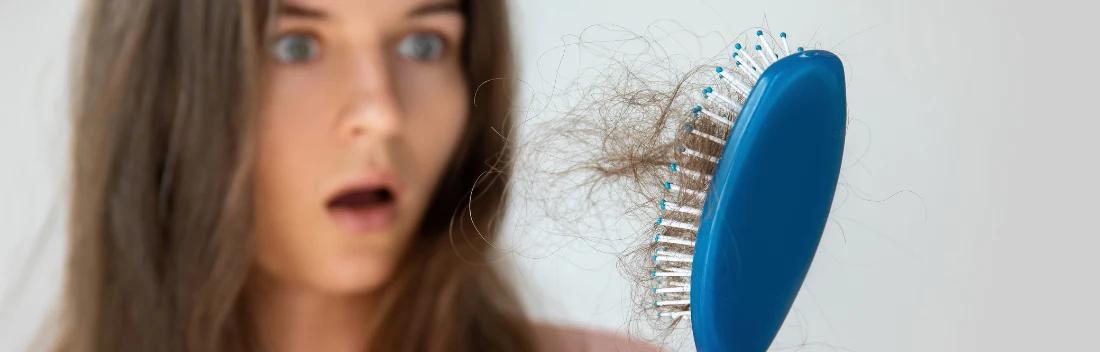
Do you notice more hair than usual on your brush, in the shower or on your pillow? If you’re wondering , ‘Why is my hair falling out more right now?’, you may be experiencing seasonal hair loss. In most cases, it’s a temporary process. In this article, we’ll explain what’s happening, how much hair it’s normal to lose, how to tell the difference between seasonal hair loss and other types of hair loss, andwhat options are available to care for and strengthen your hair.
What is seasonal hair loss?
Seasonal hair loss is a temporary increase in hair shedding that can occur at certain times of the year, particularly at the end of summer and the start of autumn. To understand this, we need to briefly discuss the hair’s life cycle. Hair grows from hair follicles. Each follicle goes through different phases: growth (anagen phase), transition (catagen phase) and rest (telogen phase), after which the hair detaches and falls out. At certain times within this hair life cycle, a greater number of follicles may simultaneously enter the shedding phase (telogen phase). This means that a few weeks later, an increase in hair loss may be observed .Therefore, finding more hair on your brush, in the shower or on your pillow should not be a cause for alarm at certain times of the year, as this is a physiological and self-limiting process.
Why does my hair fall out in autumn, and how much is normal?
One of the questions we pharmacists are asked most often is, ‘Why is my hair falling out more right now, in autumn?’. The answer is simple: seasonal changes influence the hair’s life cycle and can bring forward the onset of the shedding phase. Other factors can also play a part: lack of sleep, stress, getting back into a routine, weight fluctuations, hormonal changes, changes in diet… We lose hair every day; under normal circumstances, we lose between 50 and 100 hairs a day, varying depending on the individual, hair length, hair density, and washing and care habits. What we should pay particular attention to is how the hair loss progresses: if it occurs occasionally and gradually decreases over time, we shouldn’t worry too much about it; however, if hair loss has been going on for quite some time and is accompanied by a loss of volume or hair density, this should be a cause for concern, and you should consult a healthcare professional.
When should we pay closer attention to hair loss?
Remember, it is advisable to consult a healthcare professional if:
- Hair loss is excessive and has been ongoing for several months.
- There is a loss of density.
- Patches or thin, bald areas appear.
- Your hair is gradually becoming finer.
- The hair loss is accompanied by scalp problems: itching, inflammation, flaking, etc.
- There are other factors or symptoms that may be linked to hair loss (medication, thyroid issues, anxiety, cancer treatment, etc.)
The key is to identify the type of hair loss in order to determine the most appropriate treatment.
Seasonal hair loss or alopecia: how to tell the difference
Although they may appear similar, seasonal hair loss and alopecia are not the same. Whilst both involve hair loss that may be a cause for concern, they differ in their cause and the root of the problem. In seasonal hair loss, hair is lost temporarily without any reduction in density. Over the course of several weeks, the hair gradually returns to its normal growth cycle. With alopecia, depending on the type, there may be a sustained reduction in hair density, changes in hair thickness, alterations in follicle morphology, and even the appearance of patches or areas of hair loss. There are different types of alopecia, and the approach to each varies. In such cases, it is advisable to consult a dermatologist or trichologist so that they can monitor and manage the condition. Therefore, we cannot simply assume that all hair loss is seasonal; we must observe how it develops and treat it according to the cause and context of the situation.
Treatment for hair loss: what works and when to seek advice
There is no single treatment for hair loss that works for every case. We must address each situation by considering the cause, the type of hair loss, the consequences and the individual’s needs.
We must understand that an essential step in treating seasonal hair loss is to supplement our diet to provide our hair, from the inside, with the nutrients it needs to grow healthy and strong. Our top recommendation at Farmaciasdirect for seasonal hair loss:
Iraltone Forte
Iraltone Forte is a dietary supplement formulated to care for and strengthen hair and nails, particularly in cases of reactive hair loss, such as that associated with stress, changes in diet or seasonal changes.
It may also be recommended as nutritional support when hair is fine and appears brittle, dull or weakened.
The recommended dosage is 1 capsule a day, in the morning or at night. Taking it in the morning aids the absorption of nutrients. It is gluten-free.
Iraltone Forte Melatonin
Iraltone Forte Melatonin shares the same objective as Iraltone Forte, namely to strengthen the hair and help prevent reactive hair loss, but it incorporates melatonin into its formulation.
This feature may be particularly beneficial when hair loss coincides with periods of lack of rest or difficulty in achieving restful sleep. In such cases, the recommended dosage is 1 capsule approximately 15–20 minutes before going to bed.
However, it should be borne in mind that food supplements are no substitute for a varied and balanced diet, nor for an assessment by a healthcare professional in cases of persistent or significant hair loss; in such instances, a dermatologist or trichologist should assess the situation in order to establish the correct diagnosis.
A varied and balanced diet, in addition to anti-hair loss supplementation, must be accompanied by another essential step for the treatment to be effective: treating the scalp. To this end, we will apply various topical treatment (serums, lotions, ampoules, etc.) with the aim of restoring the hair bulb, balancing the scalp’s pH and stimulating hair growth.
Complementing the anti-hair loss treatment with a fortifying or anti-hair loss shampoo may also be beneficial for strengthening the hair shaft, though it is not essential. Using a good shampoo specifically formulated for your hair type is very important to ensure there is no disruption to your hair shaft or scalp.
Remember that, for the hair loss treatment to be successful, you must follow it for at least 3 months, as this is approximately the length of the hair’s life cycle. Combine it with other good habits: using the right brush, applying heat protectants (if you use straighteners or a hairdryer) and avoiding tight hairstyles.
Pharmacist’s advice: key to choosing the right hair loss treatment
When experiencing hair loss, the first step should be to identify the cause – in other words, what might be behind it. Factors such as diet, stress, sleep, hormonal changes, lifestyle, certain medicines, genetic triggers or certain medical conditions can all influence the hair’s life cycle.
Therefore, before choosing a hair loss treatment, it is important to assess the context and your medical history, and to consult a healthcare professional if your hair loss does not improve or is cause for concern.
Do you have any concerns about your hair loss? Consult our team of pharmacists and receive personalised advice on how to care for and strengthen your hair according to your needs. Because when it comes to hair loss, the key is always to start with sound expert advice.