Myths and truths about what head lice are like

Published: 9/3/2026
With the start of the new school term comes one of the most common concerns at this time of year: head lice. Do they jump from one head to another? Are they caused by poor hygiene? Do you need to use products to prevent them? In this article, we debunk some of the most common myths about head lice and tell you how to deal with them properly, as well as what extra care you can incorporate into your hair care routine at this time of year. Read on!
If we ask ourselves what head lice are or what they look like, they are small parasitic insects that can be found on children’s heads and, in some cases, on adults’ heads. Lice are transmitted and spread through direct contact with the head of an infested person. These parasites feed on human blood from the scalp and are usually found along the hairline, at the nape of the neck and around the ears.
They are present all year round, but their prevalence increases in spring and autumn, which is why they may be back as summer draws to a close and the new school year begins.
Debunking MYTHS about head lice
Over the years, head lice have been the subject of numerous myths that persist and can hinder the use of the most appropriate and effective treatment methods.
Myth No. 1: Lice jump or fly
Do head lice fly or jump? The answer is no; head lice do not fly, nor can they jump from one head to another; they only move by crawling, so transmission of head lice only occurs through direct head-to-head contact or through the sharing of personal items. It is very important that parents and educators understand this point so that they can take appropriate preventive measures, such as avoiding the sharing of such items in settings where close contact is common.
Myth No. 2: Lice only affect people with poor hygiene
This is one of the most widespread and harmful myths, which is why people wonder whether lice prefer clean or dirty hair, and the reality is that head lice do not discriminate; they can infest anyone, regardless of their level of personal hygiene, as they feed on blood from the scalp, which means they do not depend on the cleanliness of the hair to survive.
Myth No. 3: Only children get head lice
Lice can infest any adult’s head; whilst it is true that school-age children and those in nurseries are more susceptible due to contact, the same applies to parents when their children have lice.
Myth No. 4: Using home remedies such as vinegar to kill lice
There are numerous home remedies, such as olive oil or vinegar for head lice, which have been passed down from generation to generation. However, they are not supported by scientific evidence as effective treatments for head lice. The only proven treatments that are shown to eliminate both head lice and nits are those containing ingredients such as permethrin or dimethicone.
Another widely held belief, often passed on by mothers and grandmothers, is that hair dye kills head lice because it contains ammonia or peroxide. The reality is that head lice are extremely resilient, and the chemicals found in hair dye have little or no effect on them; therefore, its use is strongly discouraged, particularly in children, in whom it can also cause irritation or allergic reactions.
As for prevention, a well-known and widely used remedy is tea tree oil for head lice, commonly applied as a spray. Its widespread use is due to the fact that it has shown some insecticidal activity in laboratory tests; however, in vivo, there is a lack of evidence and it may be associated with potential adverse effects, so there is insufficient evidence to recommend its use.
Myth No. 5: Lice carry diseases
Unlike other parasites such as fleas or ticks, head lice do not transmit any diseases, unlike body lice, which are known to transmit serious diseases. Therefore, their main impact on health is the discomfort they cause, such as intense itching or secondary infections resulting from excessive scratching.
Now that we’ve cleared up these myths, what can we do about head lice?
Although we cannot completely prevent infection, we can take certain measures to make detection easier and help prevent their spread:
- Avoid sharing personal hygiene items.
Lice are mainly transmitted through direct head-to-head contact, so it is advisable to avoid sharing combs, brushes, hats, towels or other items that come into contact with the hair, as well as avoiding direct contact if we know that someone is infested.
- Check your hair regularly.
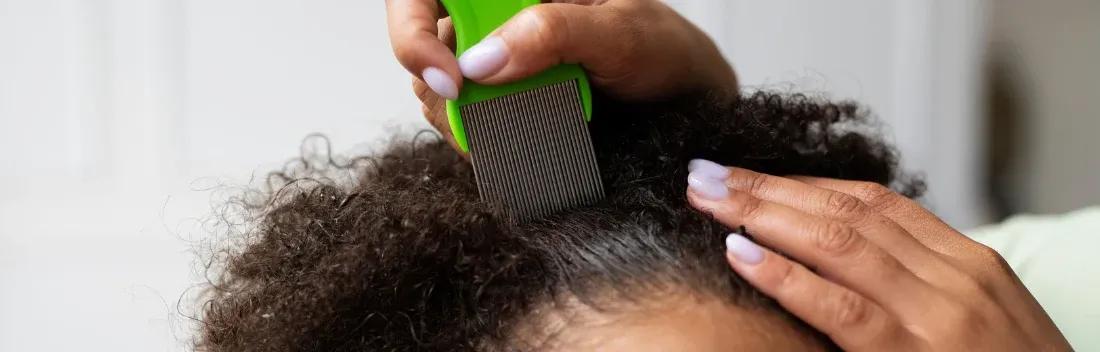
Especially if a case has been detected at school or in your immediate surroundings. A nit comb can help you check the hair for any lice or nits.
- Check the whole household.
If you find head lice, it is advisable to check the rest of the family to detect possible infections and prevent re-infestation.
- Use specific treatments to eliminate them.
If you confirm their presence, you should use products with proven efficacy that are specifically designed for their elimination, following the instructions for use correctly.
In addition to treatment where necessary, we can also adapt our hair care routine during this time using products that help keep the hair clean and look after the scalp. At FarmaciasDirect, you can find a range of options to suit the needs of every member of the family. For example:
- For children’s hair care: Klorane Lemon Shampoo.
Klorane Lemon Shampoo is suitable for regular use to keep hair clean and light, and may also offer some preventative protection against head lice in children. It has a gentle formula that makes it suitable for regular hair care, especially at times such as the start of the new school term, when concerns about possible infections are heightened.
- To soothe an itchy scalp in adults: Klorane Galangal Shampoo.
When the scalp feels itchy or uncomfortable, Klorane Galangal Shampoo combines cleansing action with soothing properties, helping to reduce itching and providing a feeling of comfort. It can be used as part of your hair care routine when the scalp is experiencing these discomforts, but it is not a treatment for eliminating lice or nits.
And remember, if you have any queries, you can consult ourpharmacy team, who will be able to advise you on the most suitable option and help you use the treatment correctly.