
Home / Blog / Health and care / Dry eye treatment

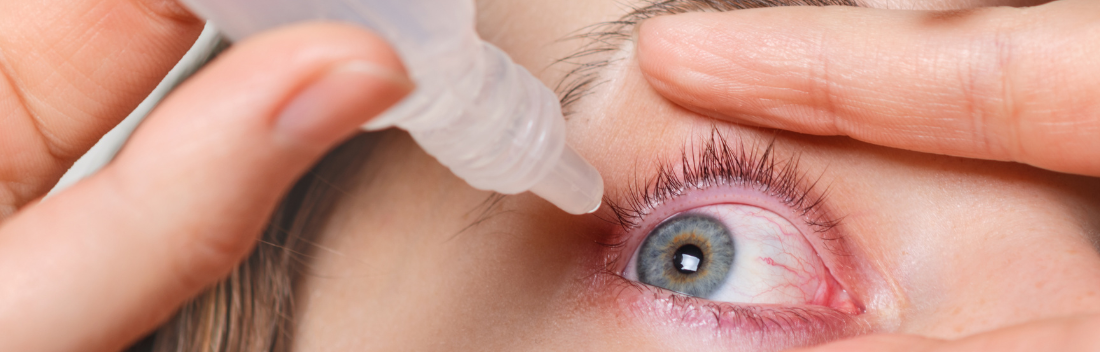
In Spain, dry eye disease affects 11-17% of the population. Its symptoms can cause significant discomfort for those who suffer from it and can even limit many aspects of their lives, potentially causing emotional distress. If this condition is not controlled or does not improve, it may end up damaging the cornea. That is why it is important to know its symptoms so you can identify it and stop it. But...
Do you know what dry eye disease is? Do you understand its importance? Do you know how to treat and/or prevent it? We answer all these questions below.
Dry eye disease: What is it? What are its symptoms?
Dry Eye Disease is a chronic condition in which the tear film in our eye is either insufficient or of poor quality, meaning the eye is not properly lubricated or hydrated, leading to inflammation and irritation.
Itching, stinging, irritation, burning, watery eyes, a foreign body sensation, seeing cobweb-like shapes, blurred vision, redness, sensitivity to light, inflammation, discomfort, difficulty moving your gaze from one position to another, problems when closing and opening the eye, and even pain... all of these are symptoms associated with dry eye disease. These symptoms can affect and limit the patient's life and may even cause irritability, discomfort, and physical and emotional insecurity.
If we do not hydrate and lubricate the eye, the condition can progress and may even end up damaging the cornea.
Causes of dry eye
In our eye, there are glands in the upper area responsible for producing tears. This is where the cause of the problem lies:
- The gland that produces tears does not produce enough.
- The tears are of poor quality and either dry out too quickly or are unable to keep the eye moist.
Women are normally more prone to suffering from this condition than men. In addition, the likelihood increases if the woman is over 50, wears contact lenses and has an immune-related condition.
Dry eye syndrome or dry eye itself may also have other causes:
- Taking certain medicines such as antihypertensives, antihistamines, antidepressants...
- Spending long periods looking at screens.
- Exposure to air conditioning, heating or a fan.
- Cold weather and wind.
- Dry climates.
- Stuffy environments.
- Associated with a disease such as diabetes, lupus, Sjögren's syndrome, etc.
- Hormonal changes, so it may be associated with pregnancy or menopause.
- Sleeping too few hours.
- Prolonged exposure to the sun.
Diagnosis
For diagnosis, we should go to a specialist doctor, who will carry out an eye examination to measure the quantity and viscosity of the tear film.
Pharmaceutical recommendation
Prevention
- Use artificial tears to lubricate and hydrate the eye. The aim of this product is to mimic natural tears and ensure they are of good quality. In this way, it hydrates, lubricates and maintains this hydration effectively and for longer.
- Use eyelid wipes to clean the eyelid, eyelashes and eyebrows. Our eyelids, eyelashes and eyebrows are highly exposed to the outside environment, and particles, allergens and other molecules build up on them throughout the day. That is why it is important to clean them with a wipe that is sterile, cleans effectively and respects the area.
- Limit the use of saline solution in the eye. We often use saline solution to clean our eyes; we may even think that we are also hydrating them in this step. However, the opposite happens; using saline solution can end up dehydrating the eye.
- Eat foods rich in lutein, omega-3 fatty acids and vitamin A. To complement this, food supplements rich in these active ingredients may be taken.
Featured products


- Avoid direct contact with air conditioning or heating.
- Limit time spent in stuffy environments.
- Wear sunglasses to prevent the wind from irritating the eye.
- Inform your doctor about the problem so they can take it into account when prescribing certain medicines, such as those mentioned above.
- Take breaks when using screens.
- Sleep 7-8 hours a day.
Treatment for dry eyes
Artificial tears, eyelid wipes, food supplements and medicines that stimulate tear production and that the doctor considers necessary.
Recommended products for dry eye care
As a preventive measure and main treatment, the use of artificial tears is recommended to help lubricate and hydrate the eye and relieve symptoms. When using them, always remember to wash your hands before applying the product and do not touch the tip (where the drop comes out) of the single-dose format. As artificial tears, we recommend the following:
Santen: Cooltears® ALO+ artificial tears
This is a product formulated for the treatment of discomfort caused by dry eye, even in severe cases, and for protecting the cornea.
It is a lubricating eye drop based on 0.4% cross-linked sodium hyaluronate (provides viscoelasticity) and 0.2% aloe vera (has moisturising, decongestant and lubricating properties).
Cooltears® Alo+ is indicated for relieving the symptoms of dry eyes, irritation and redness caused by environmental conditions or medicines. As well as lubrication and eye comfort when wearing contact lenses.
Apply 1-2 drops in each eye one or more times a day.
Santen: Cooltears® HYDRO+ artificial tears
Cooltears® HYDRO+ is indicated to relieve dry eye symptoms, eye discomfort and also as a tear substitute to protect the cornea, providing long-lasting hydration that can be used as ocular lubrication even while wearing contact lenses.
The eye drop contains 0.4% cross-linked sodium hyaluronate, a high concentration that gives the product high viscoelasticity, ensuring a high degree of hydration and staying power on the ocular surface and providing long-lasting relief from dry eye symptoms such as pain, burning, stinging, the feeling of sand or grit in the eyes, tired and heavy eyes, or watery eyes.
Apply 1-2 drops in each eye one or more times a day.
Santen: Cationorm®, artificial tears
Cationorm® is an eye drop in the form of a sterile, hypotonic ophthalmic emulsion, preservative-free, presented as a milky-looking liquid.
It is indicated for the treatment of dry eye symptoms such as
itching, burning or a gritty or foreign body sensation in the eyes, symptoms that may be caused by external factors such as air conditioning, pollution, air travel, refractive surgery, use of computer screens, contact lenses, etc., or by conditions such as meibomian gland dysfunction.
Apply 1 drop in each eye 1 to 4 times a day.
Dry eye and the patient's quality of life
Dry eye syndrome can greatly affect patients' quality of life. Its symptoms and discomfort can be constant, altering and affecting their daily routine. They may become so limiting that the patient may reduce their performance at work and in social activities; it may even interfere with sleep because of the discomfort. All of this can affect emotional wellbeing due to the prolonged discomfort.
That is why prevention and maintaining tear quality are key to relieving symptoms.
If, despite following preventive recommendations and using treatment, the discomfort persists or even worsens, consult your doctor.
For more information, you can always refer to the therapeutic information from the National Health System