Best FFP2 Masks

Last updated: 2/7/2024
/ Published: 1/26/2022
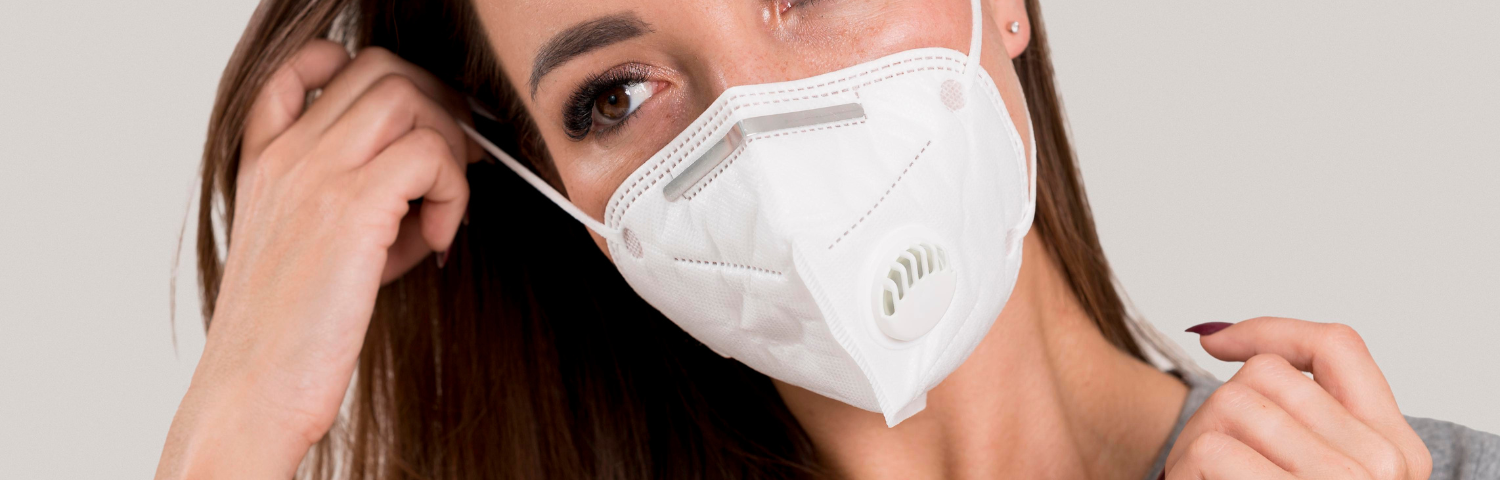
The health crisis caused by COVID-19has left us with a legacy that has changed the world forever. One of the few good things to come out of everything we went through is that we have learned to adopt healthier hygiene habits. Another of the biggest changes has been the use of face masks, something we were so unaccustomed to in the Western world.
At present, the regulations have eased considerably, and wearing a face mask is now only compulsory in a few places, basically healthcare centres, care homes and public transport. However, when these situations arise, it is worth knowing which are currently thebest FFP2 masks. AtFarmacias Directwe explain it all.
Which are the best FFP2 masks
These are some of the best FFP2 masks you can buy:
- When you need to wear a mask every day or very often, the best and most affordable option is tobuy FFP2 masks in large multipackslike this one. It is a pack of 100 white FFP2 masks with CE certification, meaning the most standard and simple model, and therefore also one of the most affordable, especially when bought in packs like this. It is also possible to buy them separately, one at a time, if you do not need so many.
- Likewise, you can also buyblack FFP2 maskswith CE1 certification, the same as the white ones except for the colour, if you prefer this design. They include a flexible nose clip, which allows a better fit and improved seal.
- Finally, little ones can also protect themselves with thesechildren's FFP2 masks, also with CE certification and suitable for children aged 6 to 12.
Why use FFP2 masks?
Why use FFP2 masks if regulations allow surgical or hygienic masks, which are cheaper and make breathing more comfortable? Xavier Querol, Research Professor at the CSIC, tells us that both surgical masks and FFP2 masks offer protection, but they do so with different levels of coverage.
FFP2 and FFP3 masks have abetter particle filtration capacity, as well as fitting ergonomically and sealing the breathing space tightly, preventing aerosols such as those that transmit the virus from entering or leaving. Surgical masks, on the other hand, retain a good proportion of aerosols but not all of them.
Querol himself explains that hygienic masks emerged at the start of the pandemic as anemergency measure, that “something was better than nothing”, but they are not actually a medical product and were more of an alternative in response to shortages. The same applies to cloth face coverings, which are sometimes even less effective than hygienic masks.
Featured products


José Luis Jiménez, from the University of Colorado and an aerosol specialist, explains that the main route of virus transmission is through the air, and that is why it is necessary to use high-efficiency masks. He himself says that “the mask should leave a mark on your face if you are wearing it properly”, referring to the fact that FFP2 masks and N95 masks are the right choice because of their level of protection.
In other words, and in conclusion, the greater comfort of hygienic masks, surgical masks or face coverings also means a much lower level of protection, which goes against their main purpose. In practice, they are the equivalent of the sadly famous fine-avoidance helmets.
Features of a good FFP2 mask
The World Health Organization (WHO) identifies masks as protection against the spread of viruses and bacteria, specifying that FFP2 masks are recommended for healthcare staff or for those who are going to be exposed to contact with ill people, provided they have theEuropean certification.
FFP2 masks have a92% filtration efficiency. Originally, these were occupational protective masks, also called dust masks because of their use in jobs requiring this kind of protection, such as certain industries or the construction sector.
They differ from FFP3 masks in that the filtration capacityof the latter is even higher, at 98%, although FFP2 masks already offer good protection in the current situation. In addition, wearing a mask like this helps remind us that it is important not to touch our face until we have returned home and washed our hands: it is a necessary inconvenience that helps us keep practically unconscious habits under control.
FFP2 masks without a valve also protect both the wearer and others from the wearer, as they filter the air both on inhalation and exhalation. This is not the case with valve masks, which do not filter exhaled air and therefore only protect the wearer.
Bibliography:
- Andrés, J. M. A., de Castro, M. T. G. V., Vicente-Guijarro, J., Peribáñez, J. B., Haro, M. G., Valencia-Martín, J. L., ... & Montero, G. G. (2020). Mascarillas como equipo de protección individual durante la pandemia de COVID-19: cómo, cuándo y cuáles deben utilizarse. Journal of Healthcare Quality Research, 35(4), 245-252.
- Morales Navarro, D., & Vila Morales, D. (2016). Ffp2 Mascarilla Facialestomatología. Revista Cubana de Estomatología, 53(1), 67-83.
- Cruz, M. P., Santos, E., Cervantes, M. V., & Juárez, M. L. (2021). COVID-19, una emergencia de salud pública mundial. Revista Clínica Española, 221(1), 55-61.