Retinol and the sun: why autumn is the best time to start

Published: 11/5/2026
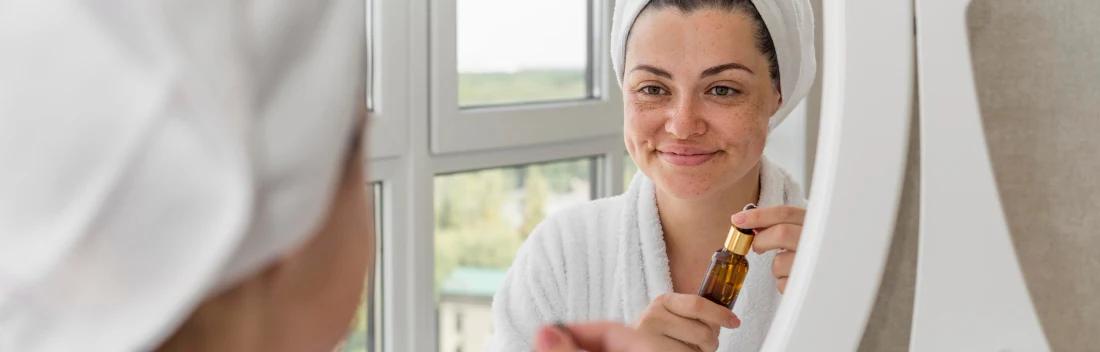
If you’ve been thinking about adding retinol to your skincare routine for a while, autumn is the ideal time to take the plunge. Summer often takes its toll on the skin, and this is where the well-known retinol comes into play. It is one of the most widely supported active ingredients in cosmetics for treating wrinkles, skin texture and dark spots, but it is also one of the ingredients that raises the most doubts at first due to the potential irritation or sensitivity it can cause on the skin. And it is precisely the sun that makes autumn the best time to start, as there are fewer hours of daylight, the sun’s rays are less intense and we spend less time outdoors, which makes it easier for the skin to adapt to retinol. Even so, the answer depends above all on the condition of your skin and how you intend to use it.
Retinol and the sun: why your skin becomes more sensitive
Retinol and its derivatives, such as retinal, are amongst the most well-supported active ingredients in cosmetics for treating wrinkles, skin texture, uneven tone and dark spots. They work by accelerating the skin’s renewal rate, and it is precisely for this reason – particularly at the start – that they can cause redness, tightness or flaking. Consequently, during this adaptation phase, the skin is more reactive; therefore, if it is also exposed to the sun without protection, irritation may increase, as may the risk of new dark spots appearing. Added to this is the fact that retinol is also light-sensitive, meaning it could lose some of its effectiveness – a reason that further supports its use at night.
Does this mean retinol is off-limits in summer?
The answer is no. Retinol can be used all year round if your skin tolerates it and is used alongside daily broad-spectrum SPF50+ sun protection. However, in summer, factors such as heat, sweat, swimming in the pool or at the beach, or increased sun exposure can cause the protection to wear off sooner, making reapplication even more important. That’s why, if you’re going to start using retinol or want to resume using it after a break, autumn makes it much easier to incorporate it back into your routine.
Photoageing: why the sun continues to damage your skin in autumn
Although solar radiation is less intense in autumn, it still affects the skin. UVB radiation is responsible for sunburn, and this does decrease to a greater extent. UVA, on the other hand, is present all year round; it passes through clouds and glass and penetrates deeper layers of the skin, where it contributes to the appearance of signs of photoageing such as wrinkles and dark spots.
That’s why sun cream isn’t just for summer. Using it daily, all year round, is the most effective way to prevent photoageing – far more so than any anti-ageing treatment. Ideally, choose a broad-spectrum sunscreen, apply it every morning as the final step in your skincare routine, and reapply it if you spend time outdoors. And if you’re also starting to use retinol, sun protection becomes even more essential.
How to use a retinol cream at night
Night-time is the best time to apply retinol as there is no sun exposure and the skin uses the hours of rest to repair itself, as this is when cell renewal takes place. Here are the key tips for using a retinol cream at night without irritating your skin.
- First, check the condition of your skin. If, after the summer, you find it’s irritated, sensitive or very dehydrated, spend a few weeks restoring its moisture levels and strengthening the skin barrier before you start.
- Apply it to clean, dry skin. A pea-sized amount is enough for the whole face.
- Start gradually. Use it two or three nights a week for the first few weeks, and increase the frequency depending on how well your skin tolerates it. A slight tightness or mild flaking at the start is normal. If you notice a lot of stinging or redness, space out your applications even further. If you were already using it before the summer and took a break, start again gradually, not at the same frequency as before.
- Don’t combine it with other exfoliants, such as acids, on the same night when you first start using it.
- Don’t forget to moisturise your skin thoroughly to maintain a healthy skin barrier. Well-hydrated skin tolerates retinol much better.
And if you’re looking for a well-tolerated retinoid cream, Avène Hyaluron Activ Procedure Lifting Cream is formulated with 0.1% retinal, a vitamin A derivative that is more active than retinol. It combines this with 2 per cent niacinamide and hyaluronic acid, which moisturises and improves the skin’s elasticity. It is suitable for all skin types and is applied once a day, in the evening. It can be used on its own or alongside cosmetic procedures (injections, laser treatments, peels) to enhance their results.
The range is completed by two new serums: Firstly, Avène Hyaluron Activ Procedure Peeling Serum combines 10 per cent glycolic acid – a leading exfoliating active ingredient that stimulates cell renewal, refines skin texture and improves radiance – 0.05 per cent retinal, which corrects the appearance of wrinkles, and hyaluronic acid, which hydrates and improves the skin’s elasticity. It is used in the evening, two or three times a week. On the other hand, Avène Hyaluron Activ Procedure Lifting Serum contains 0.1 per cent retinal and trehalose, which helps repair accumulated cellular damage to increase cellular longevity, as well as hyaluronic acid. It is a product designed to tackle the signs of ageing.
Which one should you choose? It depends on your experience with retinoids and what you’re looking to improve.
If this is your first time using retinoids or you have sensitive skin, start with just the Lifting Cream, two or three nights a week, and increase the frequency depending on how well your skin tolerates it.
If your main concerns are skin texture, pores or a lack of radiance – which is very common after the summer – the Peeling Serum is your best bet.
If your skin already tolerates retinoids well and you want to tackle deeper wrinkles and loss of firmness, the Lifting Serum offers a more intensive treatment in serum form.
Retinol and sun cream: how to protect your skin and what to expect regarding dark spots
As we’ve already mentioned, retinol and sun cream always go hand in hand. If you use retinoids at night, you’ll need SPF50+ sun protection the following day, even if it’s cloudy. Reapply it if you spend time outdoors and choose a broad-spectrum sun cream that also protects against UVA radiation.
And what about dark spots? Retinol works on dark spots because it speeds up skin renewal and helps even out skin tone, but it requires consistency. Skin texture usually improves within a few weeks, whilst dark spots take longer to fade – typically between two and three months of continuous use. Remember that, without sun cream, the treatment is pointless, as the sun will darken the dark spots again, and the irritation caused by retinol may encourage new ones to appear.
In short, there’s no exact date on the calendar to start using retinol, but autumn is one of the best times. Observe your skin, restore the skin barrier if it’s weakened, introduce the treatment gradually and never forget your sun cream.
If you’re unsure which product to choose, consult the Farmaciasdirect pharmacy team, and we’ll help you find the one best suited to your skin.