
Are all skin blemishes treated in the same way? Learn how to tell them apart

Published: 11/16/2026
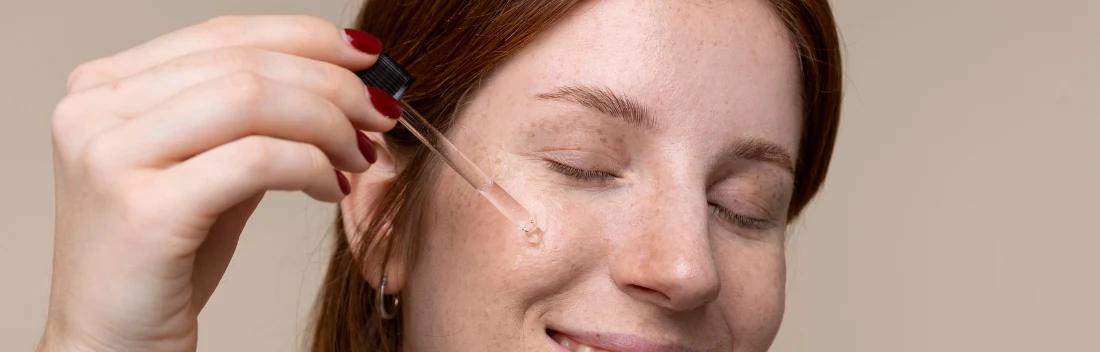
Dark spots are one of the most common skin concerns, particularly on the face. But not all dark spots are the same: they have different causes, appear in different areas and, as a result, do not respond in the same way to treatments. Understanding the different types of dark spots on the face and the rest of the body is the first step towards choosing the right treatment. In this post, we explain how to distinguish between the most common types and how to choose a depigmenting treatment based on the type of dark spot.
Why aren’t all skin spots treated in the same way?
Dark spots appear when the skin produces more melanin – the pigment that gives it its colour – in a specific area, due to melanocytes being activated by various stimuli such as the sun, hormones or inflammation.
Depending on their colour and origin, we can distinguish between different types of skin spots. These are the most common types of skin spots:
Dark or brown spots
These are caused by an excess of melanin and are the most common, particularly on the face. They can be categorised as follows:
- Solar lentigines, caused by cumulative sun exposure over the years.
- Melasma or chloasma, which is hormone-related and heavily influenced by the sun.
- Post-inflammatory hyperpigmentation, which appears following a spot, a wound or irritation.
- Freckles, which usually appear in childhood on fair skin, darken in summer and lighten in winter.
Red patches
These are caused by inflammation or dilated blood vessels, as seen in rosacea, couperose or small angiomas.
White patches
These are caused by a lack of pigment, as in vitiligo or certain fungal infections.
Each of these patches has a different cause, sits at a different depth in the skin and follows its own course. For this reason, a treatment that works for some may not be the most suitable for others, and may even make them worse.
Also note the shape: whether the patch is flat or raised. Raised, rough-textured brown patches are usually seborrhoeic keratoses, which are very common from the age of 40 onwards. They are benign but do not respond to depigmenting treatments.
Remember that if a spot changes in size, shape or colour, has irregular edges or multiple colours, bleeds or itches, you should consult your dermatologist to rule out the possibility that it is a lesion requiring medical assessment.
Solar lentigines: sunspots that accumulate over the years
Solar lentigines, also known as senile spots or age spots, are flat, brown patches with well-defined edges. They can range in size from a few millimetres to over a centimetre. They appear on the areas most exposed to the sun, such as the face, the backs of the hands, the neckline, the shoulders and the arms, and are more common from the age of 40 onwards. They are the result of cumulative sun damage over a lifetime, which is why they are more numerous in people who have had a lot of sun exposure or who have fair skin; and, unlike freckles, they do not fade in winter: once they appear, they usually remain and may even darken over time if the skin is not protected.
Skin-lightening products help to reduce the appearance of solar lentigines and even out skin tone, particularly if used consistently. In any case, sun protection is essential to prevent new ones from appearing.
Hormonal patches: Chloasma or melasma and its treatment
Melasma consists of light or dark brown patches with irregular edges, which appear mainly on the face, usually symmetrically: on the cheeks, forehead, nose, upper lip or chin. When it appears during pregnancy, it is known as chloasma. It is much more common in women and in those with medium or dark skin tones. Its main triggers are:
- Hormonal changes, such as pregnancy, hormonal contraceptives or hormone therapy.
- Sunlight, as well as visible light – including that from screens – and heat.
- Genetic predisposition.
It is a chronic condition with a tendency to recur, so its treatment requires patience and consistency. Furthermore, it can be superficial, deep or mixed, depending on the layer of skin in which the pigment accumulates; consequently, the response to treatment varies: superficial pigmentation usually improves more quickly with topical treatments, whilst deep pigmentation is more resistant.
The key elements of the approach are:
- Very high broad-spectrum sun protection every day of the year. Preferably choose a tinted sunscreen, as it also protects against visible light.
- Depigmenting products containing active ingredients that act on melanin production, such as tranexamic acid, azelaic acid or niacinamide.
- Avoid anything that inflames or irritates the skin, such as harsh treatments or intense heat, as these can make the spots worse.
- A maintenance treatment, once the dark spots have improved, to prevent them from reappearing.
In more severe cases, or where there is no improvement, a dermatologist will provide tailored advice and may prescribe other treatments available in the clinic, such as chemical peels or depigmenting agents available on prescription.
Post-inflammatory hyperpigmentation: the marks left by a spot or irritation
Post-inflammatory hyperpigmentation refers to dark patches that appear on an area of skin that has been inflamed, for example following a spot, a wound, a burn, an insect bite, eczema, hair removal or a cosmetic treatment that may have irritated the skin.
These patches may fade on their own, although this can take months. To help reduce their appearance and prevent new ones from forming, it is recommended that you:
- Treat the underlying cause. If you have acne, keeping it under control is the best way to prevent new patches from forming.
- Do not pick at the lesions, as this increases inflammation and the risk of marks forming.
- Always protect your skin from the sun, as it darkens the marks and makes them last longer.
- Use gentle skin-lightening products that even out skin tone without irritating the skin, such as azelaic acid and niacinamide.
How to choose a facial depigmenting product based on the type of blemish
A good facial depigmenting product should be suited to the type of blemish and your skin’s tolerance. Before choosing, bear in mind these key points:
- Identify the type of dark spot.
- Assess your skin’s sensitivity.
Sensitive skin requires gentler active ingredients.
- Be consistent.
Results aren’t immediate; they usually start to become noticeable after eight to twelve weeks of use.
- Introduce the products gradually, especially if they contain retinoids or acids.
- Make the most of autumn and winter to get started.
During these seasons, there is less sun exposure and your skin will tolerate the treatments better.
- Never forget to use sun protection; without it, no depigmenting treatment will work.
- Choose the right formulation.
As well as the active ingredient, the format matters too. Depigmenting products come in different textures, and choosing the right one helps make the treatment more effective and easier to maintain over time.
- Serum: it has a light texture and contains a higher concentration of active ingredients, which penetrate the skin easily. It is the most effective format for treating dark spots and suits all skin types, including oily or combination skin, as it doesn’t leave a heavy feeling.
- Cream or emulsion. As well as treating dark spots, it provides extra hydration and nourishment. It is a good option for dry or mature skin.
- Concentrates or intensive treatments. These contain a high concentration of active ingredients and are designed for more pronounced or stubborn dark spots, usually for a specific period of time.
Here are two options depending on your skin and the type of dark spot you have:
If you have sensitive skin, Neoretin Discrom Control Pigment Neutralizer is a depigmenting serum formulated with an azelaic acid derivative, which helps even out skin tone; bakuchiol, with its renewing and brightening action; and hyaluronic acid, which moisturises the skin. It is not photosensitising, so it can be used day and night all year round, even in summer. It is a good option for post-inflammatory hyperpigmentation, for skin with melasma requiring a gentle treatment, and as a maintenance treatment.
If you have more pronounced or stubborn dark spots, such as solar lentigines, Neoretin Discrom Control Concentrate is an intensive depigmenting treatment. It combines glycolic acid, which exfoliates and renews the skin; tranexamic acid; niacinamide; and an azelaic acid derivative, which act on melanin production; ellagic acid, with antioxidant properties; and RetinSphere technology, containing retinoids. It is applied at night and should be introduced gradually. As it contains acids and retinoids, sun protection is essential and it is not recommended during pregnancy.
If you’re unsure about the type of dark spot you have or which depigmenting treatment is best for you, consult the Farmaciasdirect pharmacy team and we’ll help you choose the treatment that best suits your skin.


