When Should You Take Your Baby’s Dummy Away? Tips to Make It Easier

Last updated: 1/14/2026
/ Published: 1/14/2026
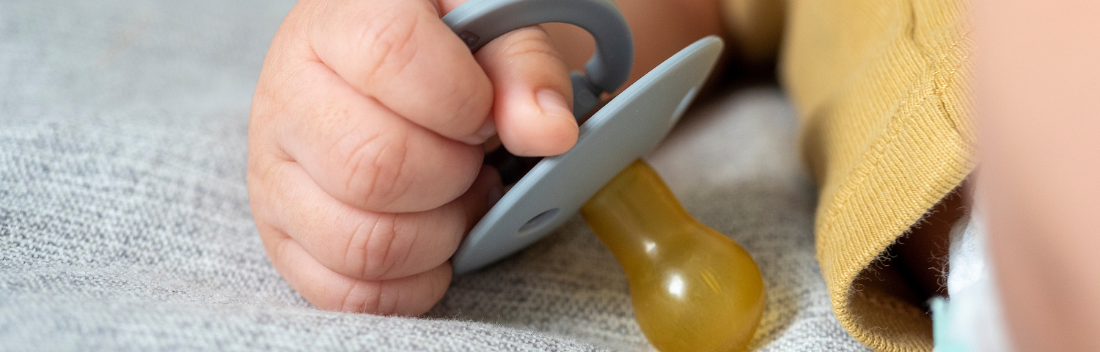
The dummy is one of the most commonly used items during a baby’s first months of life. Although it can offer benefits, it is also important to know when to take the dummy away and how to stop using it in order to avoid possible risks.
What is a dummy for?
Babies use sucking not only for feeding, but also as a way to soothe themselves and self-regulate. This comforting function is what the dummy provides, which is why it forms part of the baby’s development, especially during the first months of life.
Among its main proven benefits are:
- A reduction in hospital stay for premature babies: non-nutritive sucking helps reduce hospitalisation, and in these cases it is done using a dummy.
- A reduced risk of sudden infant death syndrome (SIDS).
However, it is important to know that its use not only brings benefits, it also carries risks such as accidental choking or dental problems.
When should a dummy be used?
It is best not to overuse the dummy and, if it is used, to do so in a controlled and temporary way, because prolonged use increases the risk of:
- Middle ear infections, especially after 6 months. This is because constant sucking can open the Eustachian tube, allowing bacteria and secretions to pass through, which causes inflammation and fluid build-up.
- Dental and bite problems, due to changes in jaw structure, especially after the age of two.
For these reasons, it is very important not to overuse it and to avoid constant use, even during the first months of life.
It should be used in a controlled way, because if it is used on demand it can create dependency, turning into the baby’s only soothing tool, which makes emotional self-regulation more difficult and can lead to the problems mentioned above.
When should the dummy be taken away?
According to the Spanish Association of Paediatrics (AEP), it is advisable to limit its use to the first 12 months of age, since the risk of SIDS becomes exceptional after the first year of life and, in addition, during this first year babies have the greatest need to suck.
On the other hand, the Spanish Orthodontic Society recommends removing it before the age of 2, which is when the risk of malocclusion, meaning bite and dental problems, increases.
How can you take a dummy away from a baby properly?
How to remove the dummy will depend on the child’s age, character and level of maturity. It is important not to take the dummy away suddenly or harshly, as it may be traumatic for the child.
- Below 15 months, it is usually easier to remove it directly and keep it out of sight, while following a series of soothing strategies when the child cries or protests.
The vast majority of children are somewhere between these two extremes in general terms, with many variations, because every child is different.
It is essential to avoid removing the dummy during major moments of change, such as starting nursery, moving house or the arrival of a new sibling.
Tips to make it easier:
- Talk to your child to explain that you are there to help and that, as they grow, they will need it less and less.
- Reduce or limit dummy use to specific times such as sleep. When the child cries or protests, soothe them with physical contact, by talking to them or by replacing it with a comfort object such as a blanket, doll or soft toy.
- Acknowledge their effort when they do not use it, with praise or by showing recognition through a star chart or happy-face calendar that you can hang on the fridge.
- Explain that they should take it out when they talk because they cannot be understood properly with the dummy in, which can help encourage them to give it up voluntarily.
- Have a specific place where the dummies are kept and only take them from there occasionally.
The final goodbye
A useful trick can be to prepare a “goodbye ceremony or party”, in which the child says goodbye to it and decides what to do with it. They can put it in a box to give to younger children, send it to the “world of dummies”, give it to the Three Kings or Father Christmas, among other options. This farewell can take place at home or at nursery together with the other children.
We have taken it away, now what? Withdrawal syndrome
At this stage, when the child has finally stopped using the dummy, it may happen again that they remember it and ask for it back. This is known as withdrawal syndrome, and it comes with intense crying, irritability, tantrums, sleep problems and a greater need for comfort.
It is very important not to buy a new one. Instead, talk to the child and remind them that they have already said goodbye to it because they are growing up. We have to wait for this phase to pass, as it is temporary and usually lasts a few days or a few weeks. It requires a lot of patience, and it is important to offer the child new forms of comfort that support them until they adapt.