Home / Blog / Baby and Mum / Heat rash in babies: treatment and recommended creams
Heat rash in babies: treatment and recommended creams

Last updated: 2/25/2025
· Published: 2/10/2025
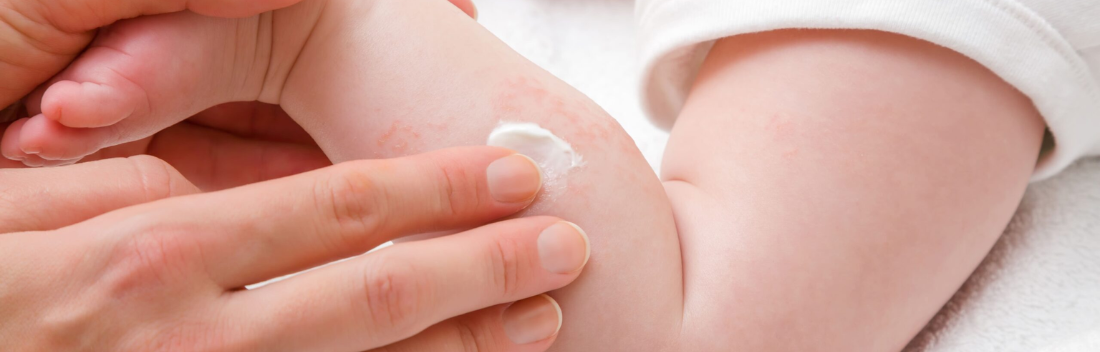
Heat rash, also known as paediatric miliaria, is a common skin condition in babies that, although not serious, can be uncomfortable as it can cause irritation, blisters or small spots on the skin. In today's post, we look at the causes, how to treat heat rash in babies and which creams to use to help manage it. Read on!
What is heat rash?
Heat rash or miliaria is a skin eruption that appears when the skin's sweat glands become blocked and are unable to release sweat. It appears as a skin rash, with small blisters or spots, especially in areas with more contact with clothing, such as the chest, back or nappy area.
Is heat rash contagious? This inflammatory condition is not infectious or contagious. However, in some cases, these lesions can become secondarily infected with bacteria, making them potentially contagious if left untreated.
Although heat rash is not usually serious, it is important to seek medical attention if:
- The rash does not improve after several days of treatment.
- Signs of infection appear, such as swelling, pus or fever.
- The irritation causes too much discomfort for the baby.
Types of miliaria or heat rash
Depending on how deeply the sweat is trapped, there are different types of heat rash:
- Miliaria crystallina: this is a form of mild heat rash that appears as small clear fluid-filled spots. It is the mildest and most superficial form of this condition.
- Miliaria rubra: appears as small reddish itchy blisters, affecting deeper layers of the dermis.
- Miliaria profunda: this is the least common but most severe form of the condition, affecting the deepest layers of the skin and causing pain and inflammation. In these cases, it is advisable to seek specialist professional care.
Causes of heat rash
Heat rash or miliaria is more common in babies and children than in adults. This is due to the immaturity of their sweat glands. Even so, it can also occur in adults, especially in warm, humid climates or in people who tend to sweat excessively. As for the causes of miliaria, these are the main ones:
- Immaturity of the system that regulates sweat: this is one of the main reasons in newborns, because the eccrine glands are still not able to regulate their function properly.
- Sensitive skin or skin prone to irritation.
- Humid and overly warm climates or too many clothes can cause a build-up of sweat and therefore contribute to the onset of this condition. The appearance of heat rash or small heat spots on the baby's body is also quite common, so it is not advisable to keep the baby in a hot environment or one with poor air circulation, as this could make things worse.
- Synthetic fabrics that do not allow the skin to breathe properly contribute to the appearance of heat rash. For that reason, it is recommended to dress babies in 100% cotton clothing.
- High fever or the use of certain medicines can also encourage it to appear.
Featured products


How can you identify it?
The symptoms of heat rash usually appear as:
- Small blisters or spots that are red or clear, depending on the type.
- Mild itching or irritation.
- Reddened areas of skin, especially in places such as folds and areas with less contact with clothing.
Although it is not usually serious, if the rash becomes inflamed or signs of infection appear, such as pus or fever, it is important to consult your paediatrician.
Treatment for heat rash in babies
Paediatric miliaria or heat rash generally disappears on its own once the trigger is removed. However, there are some care measures that can help speed up recovery and relieve the baby:
- Use cotton clothing and avoid synthetic or overly tight garments to help the skin breathe properly. This will help prevent heat rash rashes in babies from appearing.
- Bathe the baby regularly with lukewarm water and a gentle soap specially formulated for babies to soothe their delicate skin and remove built-up sweat. Avoid using harsh soaps.
- Keep the baby's room at a comfortable temperature, avoiding excessive heat. To do this, you can use fans or air conditioning (while protecting the baby from direct airflow).
- Use soothing creams and lotions as part of the baby's hygiene routine to help relieve irritation and protect the baby's skin.
- Keep the nappy area clean and dry, at least to help prevent heat rash from appearing in that area.
- If the baby is exposed to the sun, choose sunscreens specifically for sensitive skin and avoid using oils, as these may block the skin's pores. For example, we recommendHeliocare 360º Pediatrics Transparent spray con SPF 50+.
Recommended creams for heat rash
These are some of the creams we recommend for the treatment of heat rash in babies and children:
- A-Derma Cytelium Lotion: This lotion is ideal for treating skin irritation in babies. Its formula contains soothing and astringent active ingredients that help dry and protect the affected areas, even on the most sensitive skin. A-Derma Cytelium is very easy to apply thanks to its liquid, fast-absorbing texture. It is recommended to use this cream for heat rash two or three times a day on areas affected by heat rash, avoiding contact with the eyes.
- Dexeryl Emollient Cream: ThisDexeryl cream deeply moisturises the skin and creates a protective barrier against external agents. It is especially effective for preventing dryness and relieving irritation. Its hypoallergenic formula makes it safe for daily use on babies' delicate skin. Apply a thin layer to the affected areas after bathing and as often as needed.
Now you know what heat rash in babies is and which creams we recommend to treat it. If you have any other questions, remember that at Farmaciasdirect you can speak to our team of expert pharmacists.