Cradle Cap in Babies: What Is It and How Can You Remove It?

Last updated: 1/31/2024
/ Published: 5/8/2023
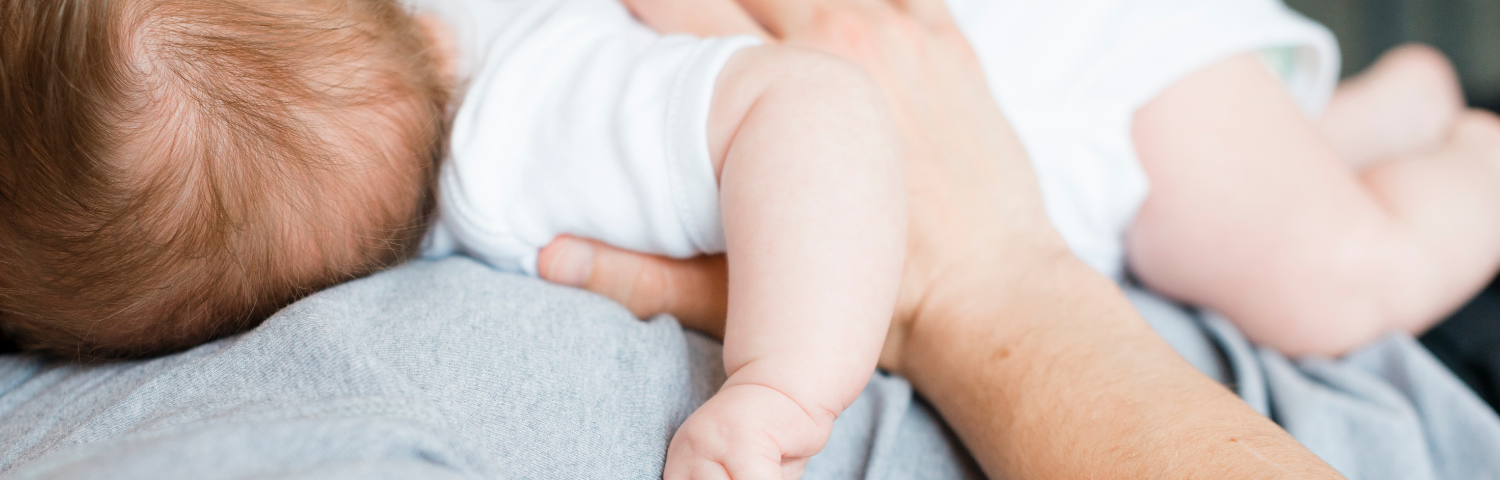
Cradle cap in babiesis something that appears on newborns' scalps during the first weeks of life. In some cases it can remain until the age of 3 and it can look quite unsightly, but it disappears on its own. Here we will talk about what cradle cap is, what causes it and what it means for little ones. Even so, we can already tell you that it is advisable to carry out a specific treatment in good time to remove it.
What is cradle cap?
Cradle cap in babies, also known as infant seborrhoeic dermatitis, is a type of flaking that affects the skin on their scalp. Other areas where it can also commonly be seen are the eyebrows, the crease of the nose, the ears, the eyelashes and the back of the neck. It appears as a kind of fine yellowish, brownish or whitish scales, depending on the case. The AEPED (Spanish Association of Paediatrics) states that this affects approximately 13% of children under one year of age. Although this percentage shows that it happens often, it usually makes first-time parents anxious. However, it is not part of any kind of disorder or pathology.It is a cosmetic issue, but it is not painful, contagious or caused by poor hygiene, so there is no need to worry. What happens when it appears? In some cases, the little one's skin may crack and start to ooze a kind of clear or yellowish liquid. If this happens, it is important not to try to pull off the crust. The reason is that it can cause small wounds that may become infected and, consequently, create an even bigger problem.
Causes of cradle cap
At present, no single reason has been established for why cradle cap appears, as every child is different. Some people associate cradle cap in babies with diet, but the truth is that, unlike what was believed a few years ago, it is not related to milk intolerance.Today, professionals tend to favour an origin linked to hormones and the final stage of pregnancy. During pregnancy, the mother passes them on to the foetus and they cause overstimulation of the sebaceous glands on the scalp. As a result, these glands produce a large amount of sebum which, when it comes into contact with the microorganisms in the epidermis, develops the greasy scales that lead to this flaking. Faced with this situation, many families ask questions about how to remove cradle cap or whether it is possible to do so safely while avoiding complications. In reality, to prevent skin infections and inflammation, a series of precautions should be taken into account:
- Do not try to remove or lift the scaleswith a comb, so as not to worsen the appearance of the dermatitis.
- If the baby tends to touch their head a lot, it is advisable to put cotton mittens on them.
Featured products


- Keep the baby's nails trimmed at all times to prevent scratching. They should also, of course, be kept clean.
- If you have any doubts at all about cradle cap and its treatment,it is best to see your paediatrician.
How do you remove cradle cap in babies?
If a baby has a mild case of cradle cap, there is no need to do anything, because it will disappear on its own. Even so, it is possible to take some action. There are several things that can be done to remove it, although it is advisable for a paediatrician to supervise it. First of all, aggressive treatments should be ruled out to avoid adverse reactions and, above all, because in most cases it disappears spontaneously. On the other hand, one of the most effective and gentle tricks for babies' skin is to apply an emollient substance to the head and give a gentle massage. This can be done about half an hour before bath time to help soften the area. That is the aim; therefore, there is no need to press, and in certain cases it can be left on overnight. It should then be washed with a gentle shampoo gel that is kind to the baby's skin and will not dry out their hair. For that reason, it is important to choose products that do not contain sulphates and are enriched with natural oils. While washing the head and before rinsing, you can also brush the area with a soft brush specifically for babies. The right thing to do is to brush the baby in the direction of hair growth. At Farmaciasdirect we have a wide catalogue of products that can be used. From lotions to specific emulsions, as well as gels that help reduce excess sebum and inflammation. As a result, they help soothe the skin, reduce redness and encourage the scales to loosen.
Cradle cap treatment
Although we have talked about how to treat cradle cap in babies focusing on the head, the way to proceed is the same on the rest of the body. For example, if it appears on the eyebrows or the area behind the ears, the same approach is used. The difference is that the oil will be removed with a natural sponge and water. Likewise, in our online shop we have a very effective cream for cradle cap. It is Ducray Kelual Emulsión Queratorreductora, a suitable product for removing scales, relieving irritation and soothing both redness and itching. This product has been designed to prevent moderate flaky conditions on the face and baby cradle cap. Thanks to its composition, it provides a strong moisturising effect and reduces the symptoms of dermatitis on the scalp. It has a very light, non-greasy texture that does not leave a sticky feeling. It is a formula that contains no fragrance or alcohol and is perfect for daily use. The greatest advantage of using it is that it removes babies' cradle cap gently and effectively. With all this information about cradle cap in babies and how to remove it, we hope we have helped reassure first-time parents and given them some guidance on how to act.