Home / Blog / Health and care / Rosacea-prone skin: symptoms, causes and treatment
Rosacea-prone skin: symptoms, causes and treatment

Last updated: 2/9/2024
/ Published: 2/11/2021
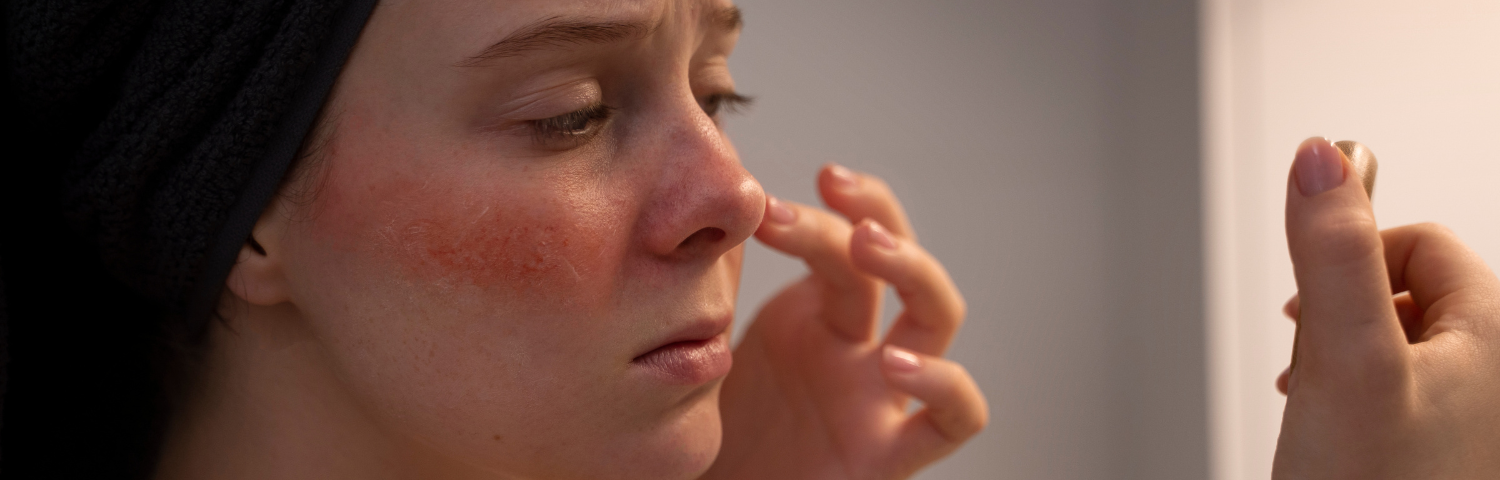
Rosacea-prone skin is a chronic condition that causes redness, specifically on the face. Although the exact cause is unknown, it may be linked to a number of factors.
In this post, we explain what they are and which treatment habits can help. Keep reading. Rosacea-prone skin . This menopausal period mainly affects adult women between 30 and 60 years old, especially during the skin condition is also more visible in people with fair skin, where symptoms tend to stand out more.
Rosacea-prone skin: what you need to know
To identify rosacea-prone skin, it is important to know that its main symptoms are the following:
- Redness of the skin in the centre of the face: forehead, nose, cheeks and chin. This may appear occasionally or become persistent.
- Rhinophyma, or swelling of the nose. This occurs mainly in men.
- Eye-related symptoms such as blurred vision, sensitivity to light, red eyes, watering, itching...
- The appearance of papules and pustules, which can look very similar to acne.
- High skin sensitivity, stinging, a sensation of heat and irritation...
Featured products


Other symptoms may include thickened skin, swollen eyelids, chronic cough and visible dilated capillaries. As we mentioned earlier, the cause is unknown. However, there are
factors that can trigger rosacea-prone skin
, such as extreme temperatures, heavy sun exposure, hormonal changes (pregnancy or breastfeeding), high alcohol intake, emotional triggers such as stress, anger and anxiety, drug use, very hot or spicy foods, and the use of certain cosmetics or medicines.
- Treatments for rosacea Although there is still no known cure for rosacea, some approaches may help ease symptoms and noticeably improve the skin: Cleansing. The skin of people with
- rosacea is very sensitive, so avoid products with alcohol or acetone. When cleansing, also avoid very hot water.Moisturisers are useful for helping to prevent irritation. Protection.
- Using sun protection creams is essential, as is avoiding excessive sun exposure
- . Do not make the mistake of skipping sunscreen on cloudy days, as UV radiation can still affect the skin.
If you wear make-up, it is also important to choose products that do not upset this skin type. Healthy diet. A balanced diet rich in vitamin C can help support skin affected by rosacea. Try to avoid foods high in fat. Physical therapies. Laser therapy, light therapy and massage carried out by dermatologists may also help with this skin condition. rosacea. That said, before choosing one treatment over another, our recommendation will always be to consult your dermatologist so they can assess your skin and decide which option is the most suitable for your