
Progressive Contact Lenses: How Do They Work?

Last updated: 11/13/2025
/ Published: 11/13/2025
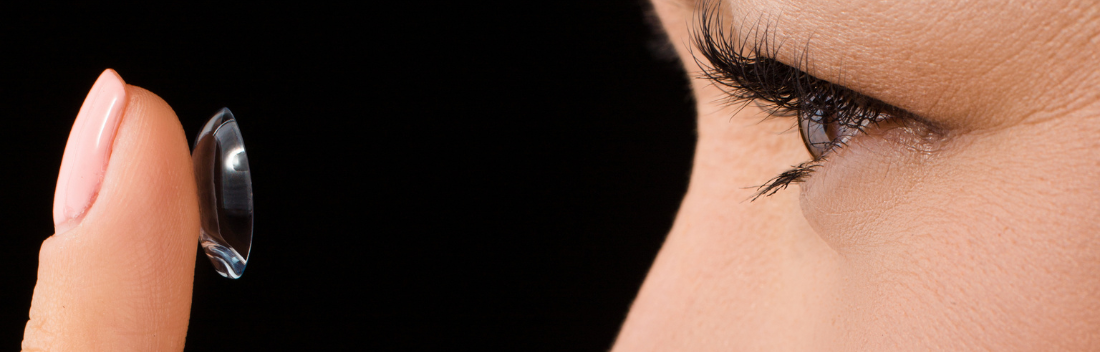
Presbyopia is a visual condition that affects a large part of the population. To correct it, many people choose progressive glasses, but progressive or multifocal contact lenses are a comfortable, discreet and practical alternative that is becoming increasingly popular.
What is presbyopia?
Presbyopia is a visual condition that occurs as a result of a natural process: the ageing of the crystalline lens.
The crystalline lens is the internal lens of the eye which, over time, loses flexibility and makes it harder to focus on nearby objects.
Some of the signs that tell us the crystalline lens is no longer working properly and that we may be experiencing presbyopia are:
- Difficulty reading.
- Difficulty focusing on nearby objects.
- Difficulty carrying out tasks that require near vision, such as threading a needle.
What are progressive contact lenses?
progressive contact lenses are contact lenses designed to correct presbyopia, meaning vision at multiple distances: near, intermediate and far. They can also correct myopia, hyperopia or astigmatism.
These contact lenses are characterised by having zones with different powers or prescriptions, allowing the eye to focus correctly at different distances without having to change from one lens to another.
This type of contact lens is also called multifocal contact lenses.
How progressive contact lenses work
Progressive or multifocal contact lenses work on the basis of two optical principles:
- The concentric or annular design: the different prescriptions or powers are arranged as rings within the contact lens.
- The aspheric design: the curvature of the lens provides a smooth, gradual change in its design, creating a more progressive transition between focus zones.
Types of progressive contact lenses
Progressive contact lenses can be of different types, depending on the classification criteria:
By material
Featured products


- Soft: made from hydrogel or silicone hydrogel, they are the most comfortable.
- Rigid: higher optical quality, but they require an adaptation period.
- Hybrid: a combination of a rigid centre and a soft outer ring, so you do not have to give up either optimum quality or comfort.
By duration of wear
- Daily: single-use. For occasional users or allergy sufferers.
- Fortnightly: reusable for 15 days. They require specific hygiene and care.
- Monthly: reusable for 30 days. They require specific hygiene and care.
By optical design
- Distance-centre: for users who prioritise clear distance vision.
- Near-centre: for users who need better focus at close range.
- Simultaneous designs: these aim to correct all distances without prioritising any one of them.
Can everyone wear progressive contact lenses?
Before starting to wear progressive contact lenses, an assessment by a specialist is needed, taking the following into account:
- Visual acuity at all distances.
- Tear film condition.
- Eye health.
- Prescription.
- Needs and preferences.
Taking all these factors into account, the specialist will determine whether the patient is a suitable candidate to wear them.


